
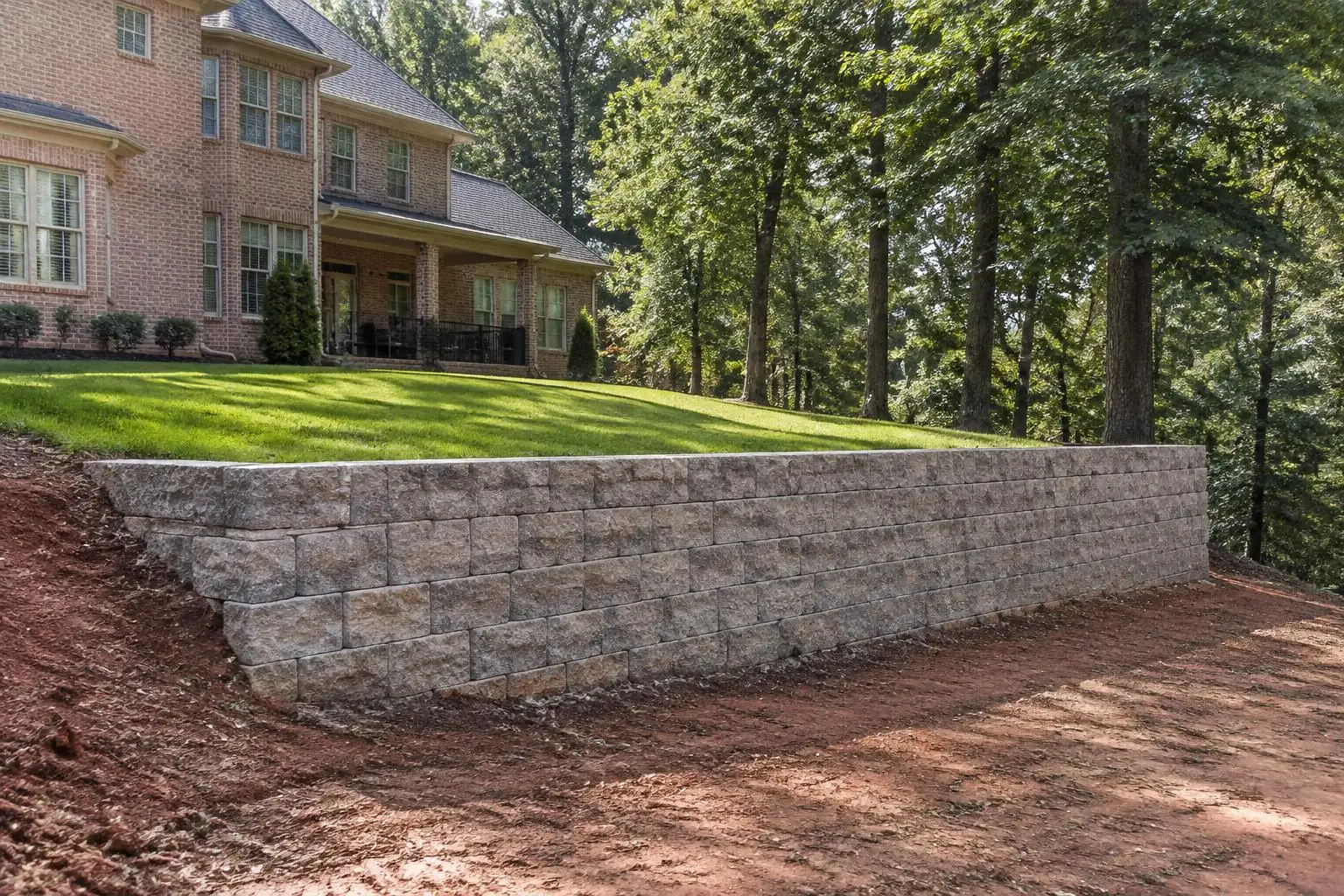
Leaning or Cracked Retaining Wall? Why a Full Rebuild Beats a Patch
November 17, 2026
A retaining wall holds back tons of soil. When it starts to lean, bulge or crack, that soil is winning, and the problem usually gets worse with every heavy rain. In West Georgia, our dense red clay makes this especially common: clay holds water, and water-logged soil pushes hard against a wall that wasn't built to drain it.
When a wall fails, the cause is almost always hidden behind it or under it: no drainage, a weak base, or a design that was never meant to hold that much soil. That's why we don't patch failing walls. We take them down and rebuild them the right way, so the problem is fixed for good.
Why a well-built retaining wall protects your investment
On a sloped Georgia lot, a retaining wall isn't decoration. It's what keeps your yard, your driveway and your foundation where they belong. Every hard rain moves soil downhill, and red clay that washes out takes your landscaping with it, undermines walkways and patios, and can send water toward your house.
A properly built wall:
- Stops erosion by holding soil in place through heavy rain
- Protects your foundation, driveway and hardscape from soil movement and runoff
- Turns an unusable slope into level yard you can actually use
- Directs water where you want it instead of where gravity takes it
- Adds curb appeal and value that lasts for decades when it's built right
The key words are "built right." A wall that's built cheaply, without drainage or a proper base, can fail in just a few years, and replacing a failed wall costs far more than building it correctly the first time. Quality construction is what protects the investment.
Warning signs your retaining wall is failing
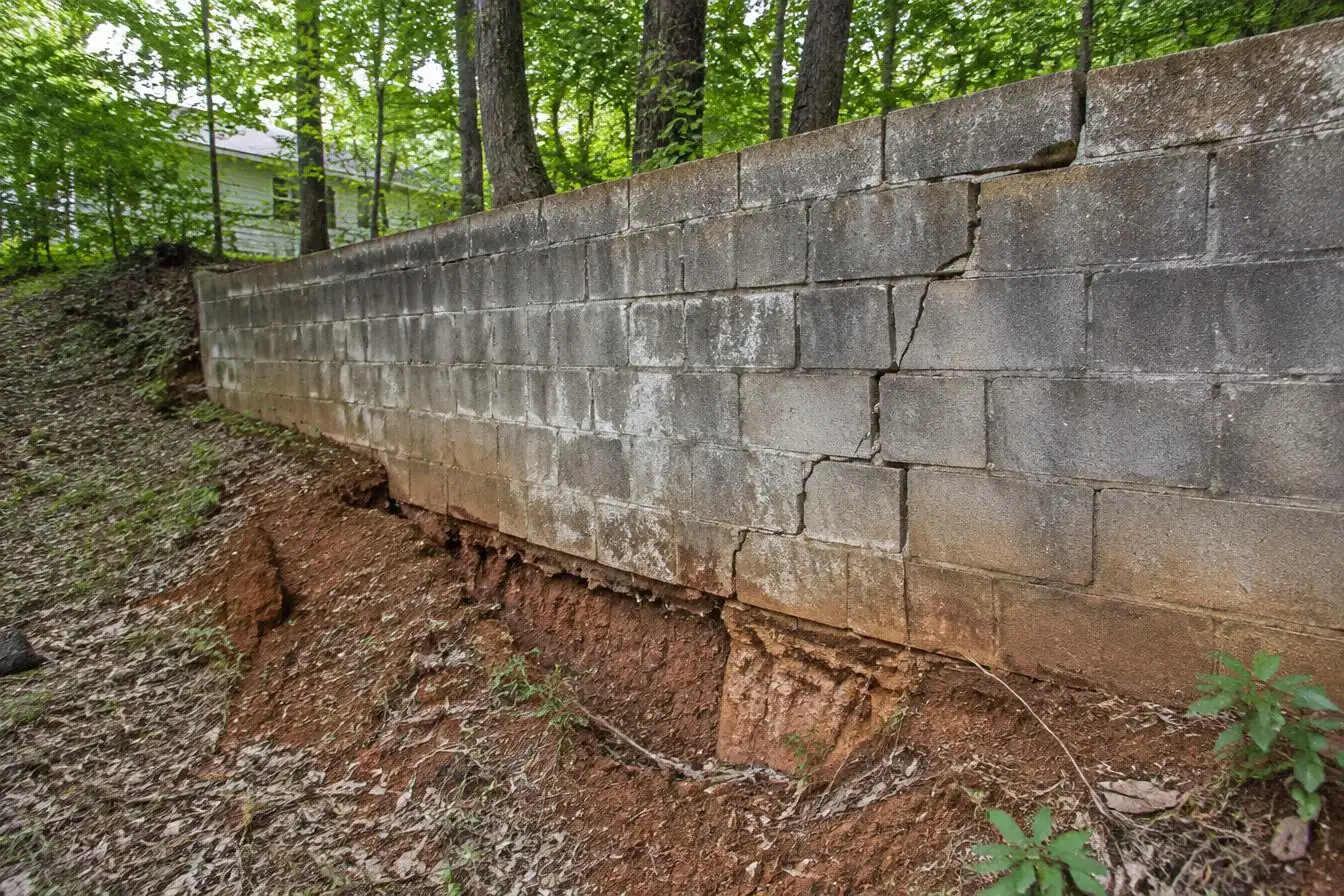
- The wall is leaning forward or the top is out of line
- A section is bulging outward in the middle
- Cracks running through blocks, mortar or poured concrete
- Blocks or stones shifting, sliding out or falling off
- Gaps opening between the wall and steps, patios or the house
- Water seeping through the face of the wall or pooling at the base
- Soil washing out from under or around the wall
- Timber walls that are soft, rotting or bowing
Several of these together, or any sign that's getting worse, means it's time to have the wall looked at before it fails during a storm.
Why retaining walls fail in Georgia clay
- No drainage: the most common cause of failure. Without gravel backfill and a drain pipe behind the wall, water builds up and pushes the wall forward.
- Clay soil pressure: Georgia red clay holds water and expands, adding pressure that a wall without drainage can't handle.
- A weak base: walls built on soft or uncompacted soil settle and tilt.
- Too tall for the design: taller walls need deeper bases and reinforcement. A wall built like a garden border but holding back a hillside will eventually move.
- Age and material: wood timbers rot, and older dry-stacked walls loosen over time.
- Tree roots and added weight: roots, driveways, parked vehicles or structures near the top of the wall add pressure it wasn't built for.
How a failing wall puts the rest of your property at risk
A retaining wall rarely fails on its own. When it moves, everything it's holding up moves with it.
- Driveways and parking pads above the wall can crack and settle as the soil underneath shifts.
- Patios, walkways and steps near the wall can separate, tilt or break apart.
- Water that the wall used to control can be redirected toward your foundation, basement or crawl space.
- Fences, trees and landscaping along the top of the wall can lean, topple or wash downhill.
- Soil and debris from a collapsed wall can spill onto a neighbor's yard, a sidewalk or the street.
That's why we look at the whole area around a failing wall during an estimate, not just the wall itself. Protecting the wall protects everything around it.
How to check your own wall this winter
You don't need special tools to keep an eye on a wall you're worried about. A few minutes after each heavy rain will tell you a lot.
- Take photos from the same spots each time, so you can compare them over the coming weeks.
- Mark the ends of any cracks with a pencil or a piece of tape, and check whether they've grown.
- Hold a level or a straight board against the face of the wall to see whether the lean is getting worse.
- Look at the base of the wall for washed-out soil, new gaps or standing water.
- Check the top of the wall for sinking soil, cracks in the lawn or pavement, or gaps behind the cap.
If anything is changing from one rain to the next, the wall is still moving, and it's time to schedule an estimate.
Why we rebuild instead of repair
Most walls that have been compromised won't hold up for the long term if they're only repaired. Resetting a few blocks or adding a brace treats the symptom you can see. It doesn't fix what's behind the wall. If there's no drainage, the water pressure that pushed the wall out is still there. If the base is weak, the wall keeps settling. A patched wall usually moves again within a few rainy seasons, and by then the damage to the yard, driveway or patio around it is often worse.
That's why we take a failing wall down and rebuild it from the ground up. Starting over is the only way to put in what was missing: a solid base, real drainage and proper backfill. The result is a long-lasting wall that will serve you and your property for decades to come, instead of a repair you'll be paying for again in a few years.
What a full demo and rebuild involves
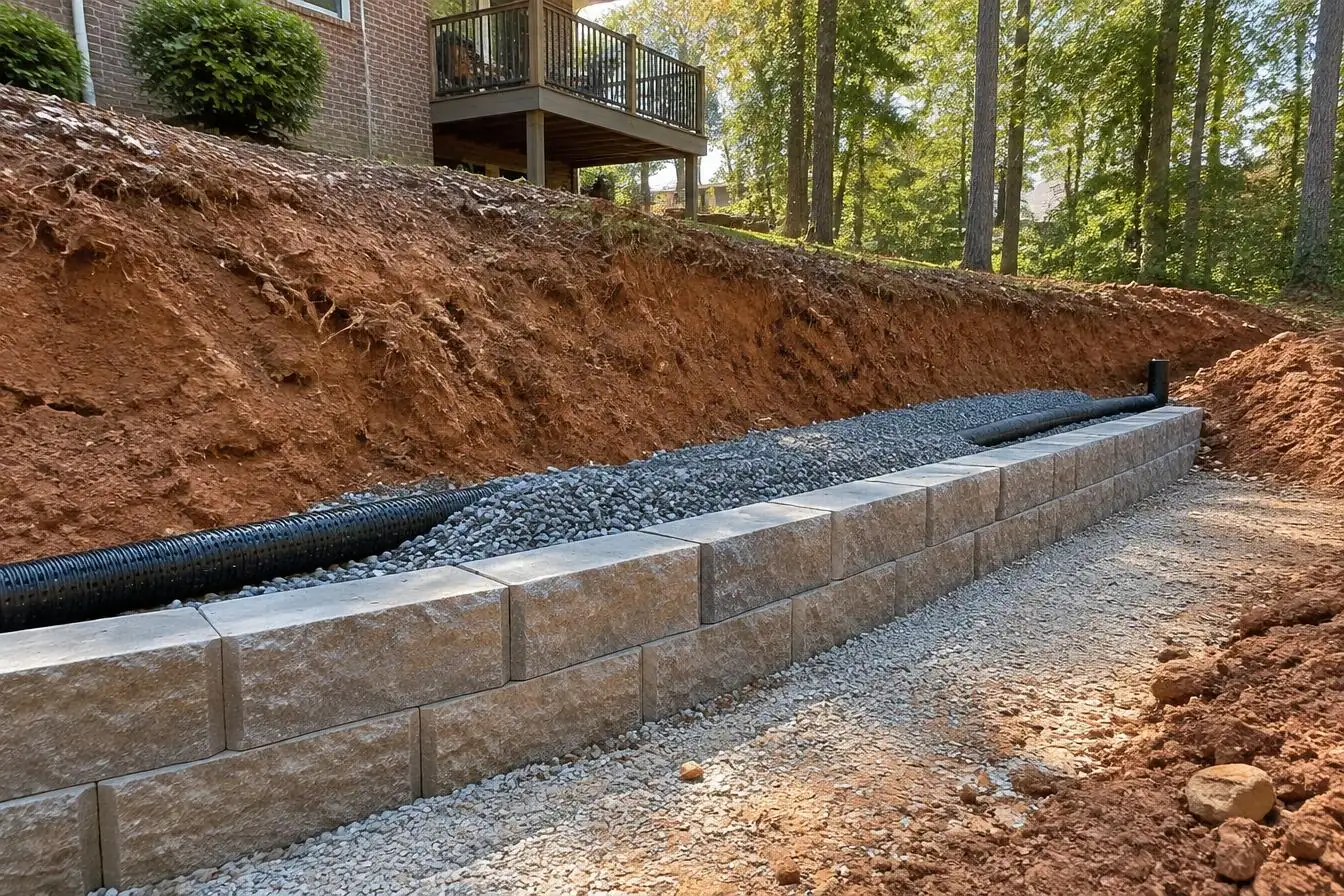
- Site evaluation and design: we look at the soil, slope, water flow and height, and plan the new wall around them.
- Demolition and removal: the failing wall is taken down and hauled away, along with the saturated soil and debris behind it.
- Excavation and footing: we dig down to a compacted gravel base so the new wall can't settle.
- Wall construction and drainage: every wall we build includes a French drain system, with gravel backfill behind the wall so water has somewhere to go.
- Backfill, grading and finish: we backfill, compact and grade the area so water moves away from the wall.
These are the steps that don't show once the wall is finished, and they're the ones that decide whether it lasts. Our own crew does the work, not subcontractors, and every quote is in writing.
Choosing the right material for your new wall
The right material depends on the wall's height, the load above it, the look you want and your budget. Here's how the main options compare.
- Segmental concrete block: interlocking engineered block, the most common choice for residential walls. It's strong, consistent and can be reinforced with geogrid for taller walls or heavy loads above.
- Natural fieldstone and stacked stone: a natural look that blends with Georgia landscapes, best suited to lower walls, garden terraces and borders.
- Poured reinforced concrete: the strongest option, used for tall walls, tight spaces and walls holding up driveways or structures.
Whatever the material, the base, the drainage and the reinforcement are what make it last. We'll recommend the material that fits your site during your free estimate.
What retaining wall replacement costs in West Georgia
We build with natural fieldstone, stacked stone, segmental concrete block and poured reinforced concrete. Most residential retaining wall projects range from $3,000 to $15,000+, depending on height, length and material. See full pricing on our Retaining Walls page. Every project comes with a 2-year workmanship warranty, and financing is available for all projects.
Cost depends mostly on the wall's height and length, the material, how much of the old wall and soil has to be hauled away, and how easy it is to get equipment to the wall. You get a written quote after a free on-site estimate, so you know the price before any work starts.
What drainage behind a retaining wall looks like
Drainage is the part of a wall you'll never see once it's finished, and it's the part that decides whether the wall lasts. A properly drained wall includes:
- Clean gravel backfill directly behind the wall, so water can drain down instead of soaking the soil.
- A perforated drain pipe at the base of the wall that carries water out and away.
- Filter fabric that keeps clay and silt from clogging the gravel and the pipe.
- An outlet where the drain pipe releases water at a safe spot downhill.
- Finish grading at the top of the wall so surface water flows away from it instead of pouring over it.
When we demo a failing wall, missing or clogged drainage is the most common problem we find behind it.
Hiring a retaining wall contractor in Carrollton and West Georgia
We build and replace retaining walls across Carroll, Coweta, Douglas, Haralson, Heard, Troup, Fayette and Paulding counties.
A wall is a long-term investment, so it's worth asking a few questions before you hire anyone:
- Is drainage included, and what does it consist of?
- How deep will the base be, and what will it be made of?
- Will the wall need geogrid or other reinforcement at this height?
- Will you remove the old wall completely, or build in front of it?
- Who will do the work: your own crew or subcontractors?
- Is the quote in writing, and does it include demolition, hauling and finish grading?
- Do I need a permit or an engineered design for this wall?
Clear answers to these questions are the best sign that a wall will be built to last.
Do you need a permit or an engineer?
It depends on where you live and how tall the wall is. Many Georgia jurisdictions require a permit once a wall is over about 4 feet tall, and an engineered design for taller walls. Sandy Springs, for example, generally requires a permit above 4 feet and a stamped engineer's design at 6 feet and up. Rules vary by county and city, so check your local requirements, or ask us about them during your free estimate.
Frequently asked questions
Can a leaning retaining wall be straightened?+
How do I know if my retaining wall is about to fail?+
Why is water coming through my retaining wall?+
Why not just repair the damaged section?+
Can you build a retaining wall in winter?+
Does homeowners insurance cover a failed retaining wall?+
How long does a retaining wall rebuild take?+
What's the best retaining wall material for Georgia clay?+
Will you remove the old wall completely?+
How much does it cost to replace a retaining wall in Carrollton, GA?+
Do you build retaining walls near me?+
Worried about your wall? Get a free estimate.
A leaning wall rarely fixes itself, and waiting through a wet winter can put your yard, driveway and foundation at risk. Call us at (770) 545-4388 or request a free estimate, and we'll show you what's causing the problem and what a rebuild will take.