
Complete Rodent Control in Atlanta & West Georgia
Struggling with mice or rats invading your home? Rodents in Atlanta and West Georgia can cause costly damage, chew through wiring, and put your family's health at risk. Don't wait until the problem gets worse—our local experts are ready to help.
Why Choose Us?
Thorough Rodent Elimination: We don't just trap and remove mice and rats—we seal every entry point, sanitize affected areas, and provide ongoing monitoring for lasting peace of mind.
Same-Day & Emergency Service: Don't let rodents take over your home. We offer fast response times, including same-day appointments when available.
Trusted Local Experts: With 15+ years serving Atlanta & West Georgia, 128+ 5-star Google reviews, and a licensed & insured team, your home is in safe hands.
No-Surprise Pricing: Free inspections and clear estimates—no hidden fees, ever.
Protect your home before rodent season peaks this fall.
Call now for your free inspection and get comprehensive rodent control from a team that knows Atlanta neighborhoods inside and out.
Understanding Rodent Control in Metro Atlanta
Rodents are the most common wildlife issue we deal with across Metro Atlanta — and they're also the most underestimated. By the time most homeowners call us, the problem is far worse than they realize. A single pair of mice can produce 60+ offspring in a year. Rats are bolder, more destructive, and can gnaw through wood, PVC pipe, and even concrete. Whether you're dealing with mice in your kitchen walls or rats in your attic, the approach is the same: trap, seal, and eliminate every entry point. Anything less is a temporary fix.
Why Rodents Are a Bigger Threat Than You Think Most people are surprised to learn that the two most common rats invading Georgia homes are the Norway rat (sometimes called the wharf, sewer, or brown rat) and the roof rat. Both are notorious not only for their ability to chew through just about anything (including electrical wires), but also for their rapid reproduction. For example, a single female rat can live up to two years and is capable of producing over 200 offspring in her lifetime. That means that a small problem can turn into a major infestation in a matter of months. Rats and mice don't just cause structural damage; they also contaminate insulation, spread droppings throughout attics and ductwork, and carry a host of diseases. That's why taking shortcuts or relying on store-bought traps rarely solves the problem for long.
In our experience, the most common mistake homeowners make with rodents is buying traps at the hardware store and thinking the problem is solved when they catch a few. What they don't realize is that for every rodent you see, there are likely 10-20 more you don't. We got a call from a family in Douglasville who had been 'managing' their mouse problem with snap traps for over a year. When we inspected, we found the attic insulation completely saturated with urine, droppings throughout the HVAC ductwork, and over a dozen active entry points around the foundation and roofline. The contamination was so severe the entire attic needed to be gutted and re-insulated.
Rodent droppings and urine aren't just unpleasant — they carry real diseases. Hantavirus from mice, leptospirosis from rats, and salmonella from both. When droppings dry out and get disturbed (like when you turn on your HVAC system), particles become airborne and circulate through your home. Chewed wiring is another critical concern — rodent-gnawed electrical wires are a leading cause of house fires in Georgia. If you're seeing droppings, hearing scratching, or smelling something musty in your walls, don't wait.
Trapping is just the first step. Once rodents are removed, true control requires a comprehensive approach — including permanent exclusion and thorough cleanup. If you skip the cleanup, the odors left behind from rodent urine and droppings will attract new pests, essentially sending out an open invitation for future infestations. That's why part of every successful rodent program is not just sealing up the house and setting traps, but also addressing contaminated insulation and sanitizing affected areas. Bait stations may play a supporting role around the exterior, but inside, exclusion and cleanup are non-negotiable for a lasting solution.
What To Do Right Now
Do This
- Call for a professional inspection — rodent problems are almost always bigger than they appear
- Store all food (including pet food) in sealed, hard-sided containers
- Check your attic and crawlspace for droppings, gnaw marks, and nesting material
- Note where and when you hear activity to help us target the inspection
Don't Do This
- Do NOT rely solely on store-bought traps — they catch individual rodents but don't solve the problem
- Do NOT use poison without professional guidance — dead rodents in your walls create terrible odors and secondary poisoning risks to pets. Poisoning might seem like a quick fix, but it often causes bigger headaches: rodents can die in inaccessible places like wall cavities or crawlspaces, leaving behind foul smells that linger for weeks or even months. Worse, decomposing rodents attract insects and can spread contamination further. If poison is ever considered, it should only be after all entry points have been sealed and active infestations removed — never as a first step. Always consult a professional before introducing any rodenticide in your home to avoid turning a rodent problem into an odor or health disaster.
- Avoid chemical baits inside your home — poisoned rodents often die in hidden, inaccessible areas, leading to lingering smells that can last for weeks or even months
- If poison is ever considered, it should only be used after all rodents have been trapped and every possible entry point has been sealed — this prevents animals from expiring inside your walls or attic where removal is nearly impossible
- Remember, non-chemical and non-toxic methods like trapping and exclusion are far safer for families, pets, and the long-term health of your home
- Do NOT sweep or vacuum rodent droppings without a mask — hantavirus particles become airborne when disturbed
- Do NOT ignore small signs — a 'minor' rodent issue today becomes a major infestation within weeks
Is This Happening in Your Home?
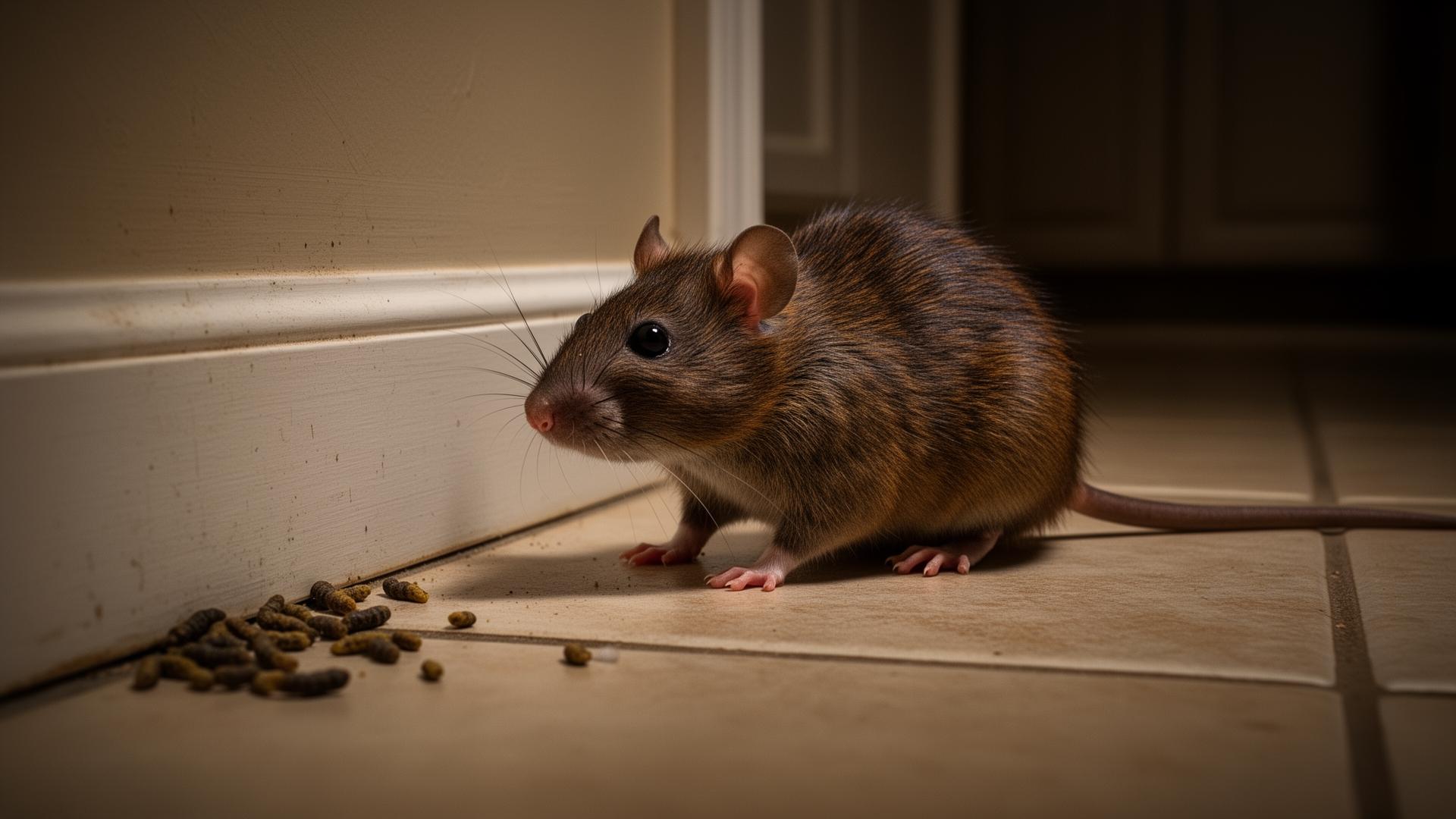
Small droppings along walls, in cabinets, or near food storage
Scratching or squeaking inside walls, especially at night
Gnaw marks on food packaging, wires, or wood
Grease marks or rub trails along baseboards
Nests made of shredded paper or insulation
Dangers & Health Risks
Disease Transmission
Rodents carry hantavirus, salmonella, and leptospirosis — all transmissible to humans through droppings and urine.
Fire Risk
Mice and rats chew through electrical wiring, creating a serious fire hazard in walls and attics.
Contamination
A single mouse produces 50-75 droppings per day, contaminating insulation, ductwork, and living spaces.
How We Solve Your Rodent Control Problem
Every situation is different, but our proven process ensures a permanent solution — not a temporary fix.
Comprehensive Inspection
We inspect your entire home — attic, crawlspace, foundation perimeter, roofline, and interior — to identify every entry point, assess contamination levels, and determine the species and scope of the infestation.
Strategic Trapping & Elimination
We deploy professional-grade traps in targeted locations based on activity patterns. We minimize poison use due to secondary poisoning risks and instead focus on effective trapping combined with complete exclusion.
Permanent Entry Point Sealing
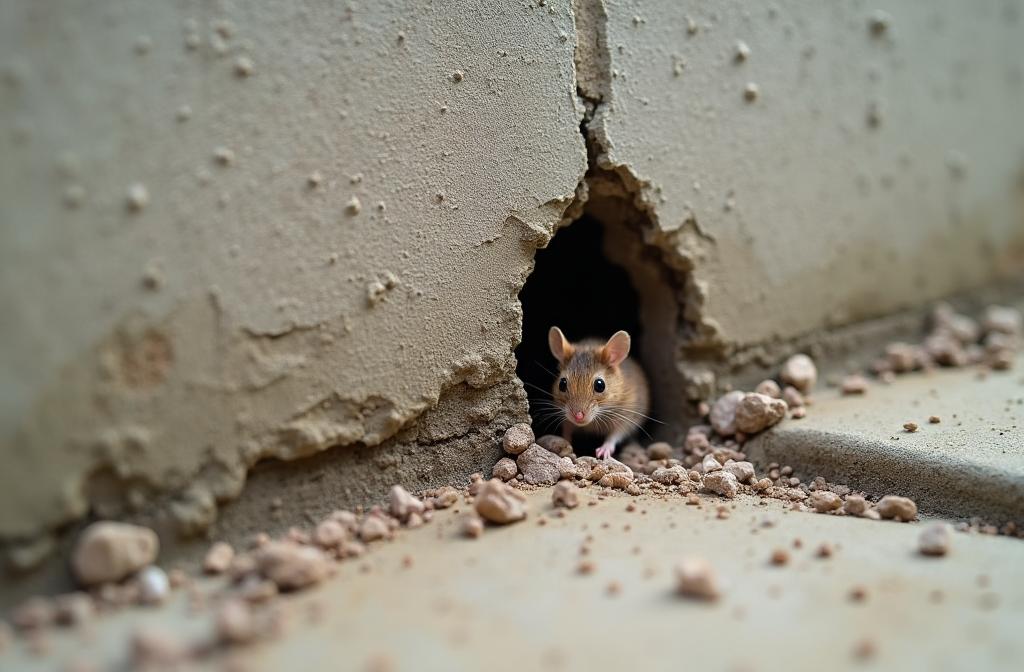
Every entry point — from gaps as small as a dime (mice) to holes the size of a quarter (rats) — is sealed with galvanized steel, commercial-grade sealants, and hardware cloth. This is the only way to stop the cycle.
Cleanup & Odor Removal
A thorough cleanup is essential after rodents have been eliminated. Removing contaminated insulation, disinfecting affected spaces, and neutralizing any lingering odors not only protects your family's health, but also prevents new rodents from being attracted to your home by the scent left behind. Skipping this step is the fastest way to end up with another infestation. With a careful blend of trapping, sealing, and professional sanitation, you can reclaim your home for good.
Common in Metro Atlanta
Metro Atlanta's warm climate and sprawling suburban development create ideal conditions for both mice and rats year-round. Norway rats are common near older foundations and sewer lines, especially in intown neighborhoods like Decatur, Grant Park, and East Atlanta. Roof rats are prevalent in areas with mature tree canopy — Buckhead, Brookhaven, and Sandy Springs see heavy roof rat activity. House mice are everywhere, and they only need a gap the size of a dime to enter. Georgia has no 'rodent season' — they're active 365 days a year, though activity increases in fall and winter as they seek warmth. Rodent problems are not limited to just one part of the metro area. Throughout all cities and counties surrounding Atlanta, homeowners face persistent issues with rats and mice invading attics, crawlspaces, and kitchens. Suburban expansion, aging infrastructure, and proximity to parks and creeks all contribute to the challenge. No matter where you live in the greater Atlanta area, it's important to stay vigilant and proactive. Regular inspections and prompt action at the first sign of rodent activity can make all the difference in preventing a minor nuisance from turning into a major infestation.
Transparent Pricing, No Surprises
Most residential rodent control projects range from $500–$4,000+
Projects can range from $500 to over $4,000 depending on your home's size, roof slopes, roof condition, soffit and fascia, overall condition of the home, and any existing damage that should be repaired during the exclusion process. Every project starts with a free inspection and transparent, itemized quote.
Frequently Asked Questions


Get Your Free Rodent Control Inspection
Get Your Free Inspection