
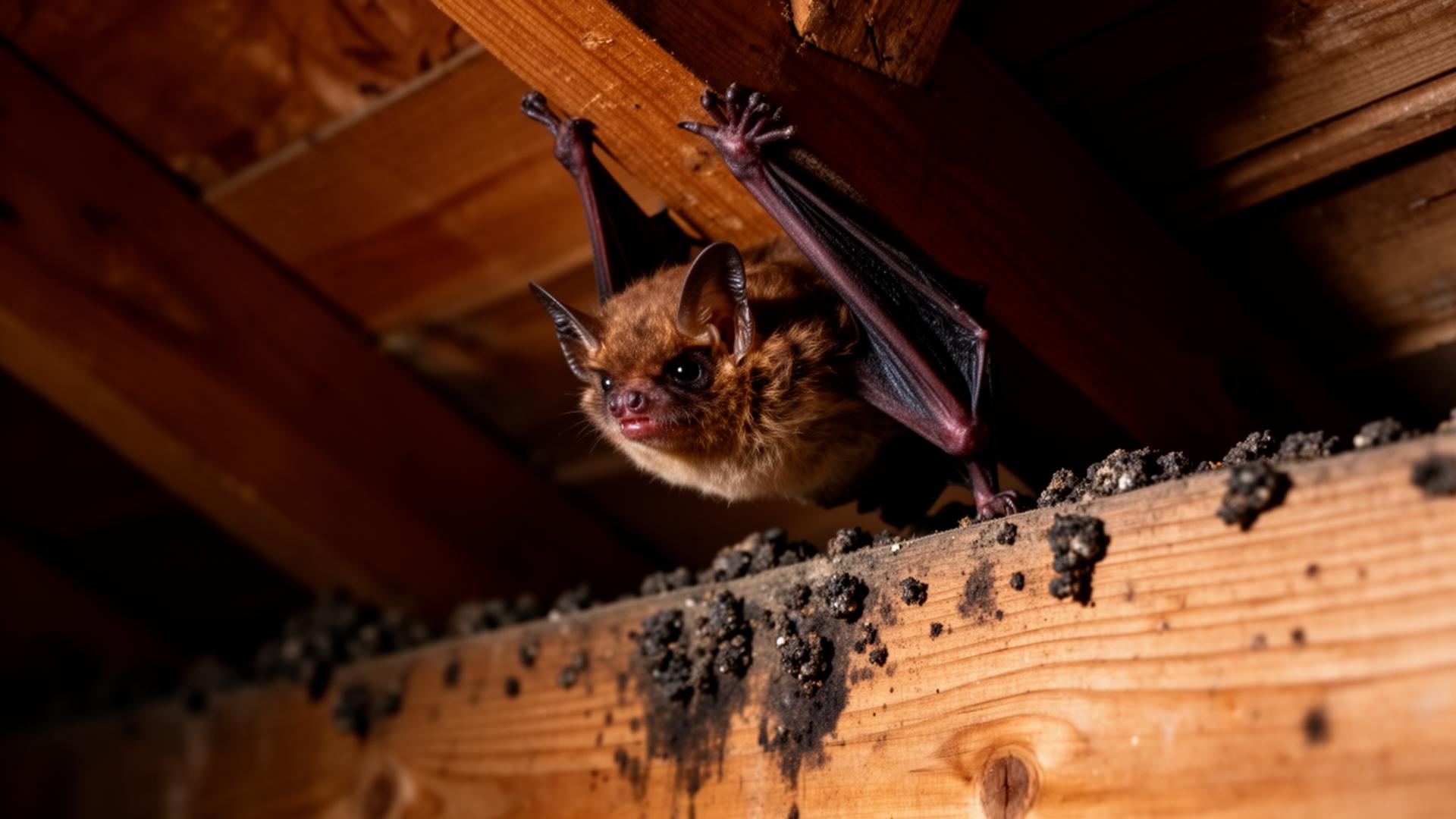
Professional Bat Removal in Atlanta & West Georgia
Hearing scratching at night? Noticing a musty smell in your attic? You likely have a bat colony—don't wait until the problem gets worse. Our licensed local experts provide humane bat exclusion, thorough guano cleanup, and permanent sealing to keep bats out for good. We back every service with our Lifetime No-Bats Guarantee—if bats return, so do we, at no extra charge.
or
Is This Happening in Your Home?
You hear scratching or squeaking in the attic at dusk or dawn
You've found small dark droppings (guano) piling up in your attic or near entry points
There's a strong, musty ammonia smell coming from your attic or walls
You see bats flying in or out of gaps in your roof, soffit, or gable vents
Staining around roof edges or soffit where bats are roosting
Take a closer look around your home's exterior—bats can squeeze in through surprisingly small openings. Check for gaps or damage in your roof, soffits, gable or roof vents, chimney caps, and even where brick meets wood or siding. Common entry points include:
Any of these can be a welcome mat for bats. If you notice holes, loose eaves, or damaged vent covers, your home could be at risk for an infestation.
If any of these sound familiar, don't risk your family's health or your home's safety. —same-day slots available for Atlanta & West Georgia homeowners!
Why Choose Us?
Locally trusted & fully insured technicians
Over 500 Atlanta-area homes made bat-free in the past year
Discreet, humane removal methods that protect local wildlife
Transparent pricing—no surprise fees, ever
See why your neighbors trust us:
"They found the bats, sealed every entry, and cleaned up—never had a problem since!"
— Sandy P., Marietta
What equipment and procedures are necessary for safe bat guano removal?
Safe bat guano removal isn't just about scooping up droppings—it's serious business that calls for the right tools and smart precautions. Proper restoration equipment, like industrial vacuums fitted with HEPA filters, is a must to trap microscopic spores and dust, not just move them around. Negative air machines paired with HEPA filtration help keep contaminants from drifting into other parts of your home.
Containment measures, such as setting up plastic air chambers beneath attic hatches, are equally important to keep those pesky spores out of your living space. Pro tip: The removal hoses should always run directly outside, never through your home, to keep potential hazards at bay.
Once the debris is out, the job's not done. A thorough cleaning calls for an odor-eliminating enzyme treatment, followed by a strong sanitizer to take care of any lingering bacteria or viruses. For larger messes, an odor-blocking encapsulant paint—designed to seal in stains, odors, and contaminants—is the cherry on top for a fresh, clean attic.
How can you distinguish bat droppings from those of mice or rats?
Bat guano, or droppings, have a few telltale signs that set them apart from mouse or rat droppings. First, bat guano usually looks a bit shiny—thanks to the wings and exoskeletons of the insects bats eat. If you gently crush the pellets (wear gloves!), they'll crumble into powder, unlike rodent droppings, which are much harder and typically stay intact.
Bat droppings also tend to pile up below roosting sites, such as attic rafters or inside chimneys, while mice and rat droppings are more likely to be scattered along baseboards or near food sources. If you notice these shiny piles collecting in out-of-the-way spots above your head, odds are you're looking at evidence of bats rather than rodents.
What is the proper protocol if you suspect rabies exposure from a bat?
If you think you've been scratched or bitten by a bat—or even wake up to find a bat in your bedroom—don't take any chances. Rabies is a rare but deadly virus, and bats are common carriers in Georgia.
Here's what to do:
• Avoid contact: Don't handle the bat with bare hands. • Contain the bat if possible: Safely trap the bat in a room by closing doors and windows, or cover it with a container if you feel comfortable doing so. • Call local animal control or your county health department: They can safely capture and test the bat for rabies. • Seek medical advice right away: Even small scratches are a concern. The CDC recommends starting post-exposure prophylaxis if there's any chance of direct contact.
Quick action is essential—always consult a medical professional if you suspect exposure. It's better to be overly cautious than risk a fatal infection.
What are blackout dates for bat exclusion in Georgia, and why must they be observed?
Georgia protects bats during their maternity season, which typically runs from May through August 15th. During this period—often called "blackout dates"—it's illegal and unsafe to perform bat exclusion if flightless pups are present. The reason? Baby bats (pups) can't fly yet, so excluding adults during these months can trap the young inside your attic, leading to starvation and even bigger cleanup issues.
By following blackout dates, we safeguard both the bat population and your home. All professional wildlife organizations, including the Georgia Department of Natural Resources and Bat Conservation International, recommend waiting until after August 15th before installing exclusion devices. This ensures all juveniles have matured and can safely exit, allowing for humane and effective removal.
What laws and regulations govern bat removal and protection in Georgia and the United States?
Bat removal is highly regulated to protect both people and wildlife. Under Georgia law and federal rules from the U.S. Fish and Wildlife Service, bats are a protected species. That means:
• It's illegal to kill bats or harm them intentionally. Lethal methods are strictly prohibited. • Exclusion work cannot be done during blackout periods—these are times of year (usually late spring through summer) when young bats, or pups, can't fly yet. Sealing up entry points when babies are present traps them inside, which is both inhumane and illegal. • Never trap, relocate, or harass bats. Handling bats without proper training is risky and against Georgia Department of Natural Resources regulations.
No — killing or harassing bats is strictly prohibited by both federal and state law. The U.S. Fish and Wildlife Service classifies bats as a protected species due to their vital role in the ecosystem. Trapping, poisoning, or attempting to seal bats inside the home—especially during the "blackout" period when flightless pups are present—can result in serious penalties.
Violating these regulations isn't just risky for the bats; it could land you with fines north of $20,000 and even jail time, particularly if endangered species are harmed. That's why removal must always be done humanely, using exclusion methods that let bats leave on their own. It's not just the law—it's the right thing to do.
What is White Nose Syndrome (WNS), and how does it impact bat removal procedures?
White Nose Syndrome (WNS) is a fungal disease that has devastated bat populations across North America. The fungus grows on bats during hibernation, often leading to severe illness and, unfortunately, widespread fatalities.
Because WNS can spread through human handling and contaminated equipment, professionals take extra precautions during bat removal. This usually means avoiding direct contact with bats and using special exclusion devices like one-way doors or bat valves. These devices allow bats to leave safely but prevent their return, minimizing disturbance and helping prevent the unintentional spread of the fungus. Any equipment used, such as bat valves, is disposed of or thoroughly decontaminated after use to further reduce the risk of transmitting WNS to other bat colonies.
Our 3-Step Professional Process
Why DIY usually fails: bats can fit through gaps as small as 3/8 inch. Missing even one entry point means the colony returns. Bats can live up to 15 years and will return each year, teaching their pups to seek out the same roost—even a decade after proofing has been removed. That's why a truly meticulous approach is critical. Here's how we solve it permanently.
Thorough Inspection
We inspect every inch of your roofline, attic, soffits, and gable vents to identify all entry points and assess the colony size. Our inspection doesn't stop at the obvious—we check ridge vents, roof vents, gable vents, side exhaust vents, chimney gaps, roof returns, soffit and fascia, brick-to-wood gaps, siding seams, and any spot where bats love to squeeze in. Even gaps as small as 3/8 inch can be an open door for a determined bat.
Humane Exclusion
We install one-way exclusion devices that let bats leave naturally but prevent re-entry. No bats are harmed — this is the only legal method during maternity season. Federal law protects all bat species, and the U.S. Fish and Wildlife Service strictly regulates their removal. In Georgia, it's illegal to trap, kill, or block entry points during blackout periods (typically May through August 15th) when flightless pups may be present. Exclusion can only begin once young bats are able to fly, ensuring no animals are stranded inside. Our certified team carefully inspects and seals every gap as small as 3/8 inch—bats are masters at finding the tiniest openings. We use exclusion doors or valves, allowing the colony to exit on their own without harm. By following state and federal guidelines, we keep your home protected and the bats safe, while also preserving their important role in the ecosystem. After exclusion, we'll assess any damage, ensure all entry points are fully secured, and prepare your attic for full remediation and repair.
Full Remediation & Repair
After exclusion, we remove all guano, sanitize and deodorize the attic, replace damaged insulation, and permanently seal every entry point. We use industry-standard restoration equipment—like negative air HEPA filtration units—to ensure harmful spores, dust, and contaminants don't circulate through your home during cleanup. Plastic containment barriers are set up, usually under the attic hatch, to protect your living spaces while we work. Hoses and removal tools stay in the attic to prevent spreading debris through your house. Once all bat guano and contaminated materials are removed, we apply specialized odor-removing enzymes and sanitizers throughout the affected areas. If your infestation was severe, we can add an odor-encapsulating sealant that locks in stubborn smells, stains, and harmful spores. This comprehensive process restores your attic to a safe, healthy condition—so you can breathe easy and bats won't return.
By addressing every step with precision and care, we guarantee long-lasting results—protecting your home, your family, and Georgia's vital bat populations.
Transparent Pricing, No Surprises
Projects can range from $500 to over $4,000 depending on your home's size, roof slopes, roof condition, soffit and fascia, overall condition of the home, and any existing damage that should be repaired during the exclusion process. We provide a detailed quote after your free inspection.
Most jobs completed same or next day. No hidden fees. Satisfaction guaranteed.
Frequently Asked Questions About Bat Removal
What Our Bat Removal Customers Say
"Had bats in our attic for months. The Outdoors Group solved it in one visit and sealed every entry point. They cleaned up all the guano and replaced our insulation. Incredible work — wish I'd called sooner."
James T. — Carrollton, GA
Get Your Free Bat Inspection
We'll identify all entry points and provide a detailed quote — no obligation.