
Why Georgia Crawlspaces Fail — And What Actually Fixes It
Georgia's climate is one of the harshest environments a crawlspace can exist in. We get 50+ inches of rain per year, summer humidity that regularly hits 90%, and clay soil that holds moisture against your foundation year-round. Without proper encapsulation, that moisture migrates directly into your crawlspace — rotting floor joists, feeding mold colonies, rusting HVAC components, and driving up your energy bills as conditioned air escapes through a damp, uninsulated underfloor. We've inspected thousands of homes in Carrollton, Douglasville, Newnan, and Metro Atlanta, and moisture damage in the crawlspace is one of the most consistently underestimated problems homeowners face.
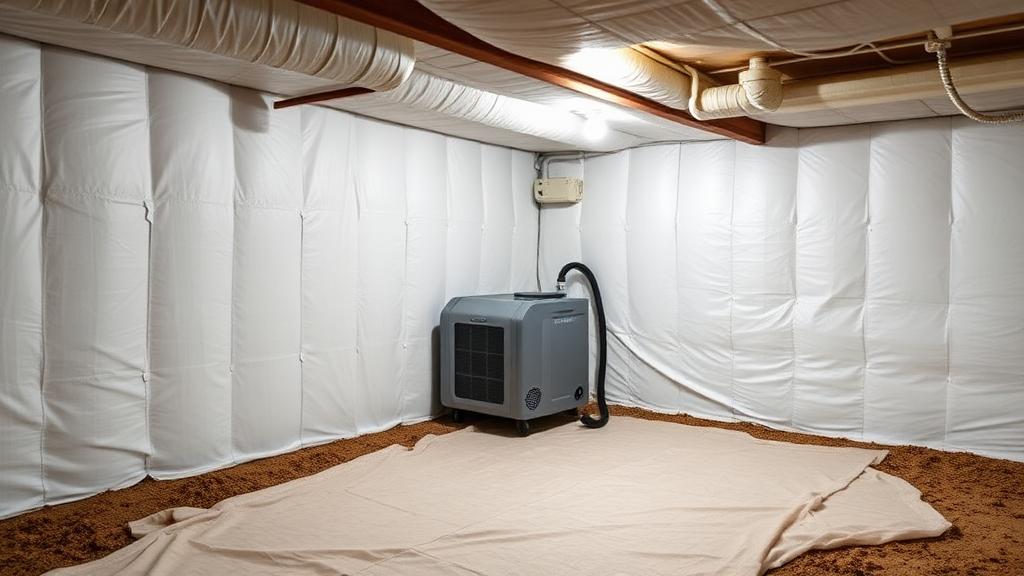
Standard crawlspace venting — the older approach of installing foundation vents to "let the crawlspace breathe" — actually makes the problem worse in Georgia's climate. When humid outdoor air enters the cooler crawlspace, it condenses on surfaces exactly like a cold drink sweats in summer heat. Encapsulation solves this by sealing the crawlspace entirely: a heavy-duty vapor barrier is installed across the floor and up the walls, the space is conditioned or dehumidified, and all vents are sealed. The result is a dry, controlled environment that protects your home's structure and improves indoor air quality throughout the house.
The difference between a crawlspace encapsulation that lasts 20 years and one that fails in three is the quality of the liner and the installation technique. We use commercial-grade 20-mil reinforced polyethylene liner — not the thin 6-mil plastic that degrades and tears within a few years. Every seam is taped and overlapped. The liner runs up foundation walls and is fastened at the top. Drainage boards are installed on the floor where needed. A properly sized dehumidifier or supply duct brings the space into conditioned territory. Everything is done by our own crew — not subcontractors — because we stand behind this work with a written guarantee.
Signs Your Crawlspace Is Failing
Musty smell coming through floor vents or living areas
Higher-than-normal energy bills — especially in summer
Sagging or soft spots in your floors
Visible mold or white efflorescence on foundation walls
Pest activity — mice, insects, and snakes favor moist crawlspaces
Condensation on ductwork, pipes, or the vapor barrier
What We Do
What We Don't Do
Our Crawlspace Encapsulation Process
Free Inspection & Assessment
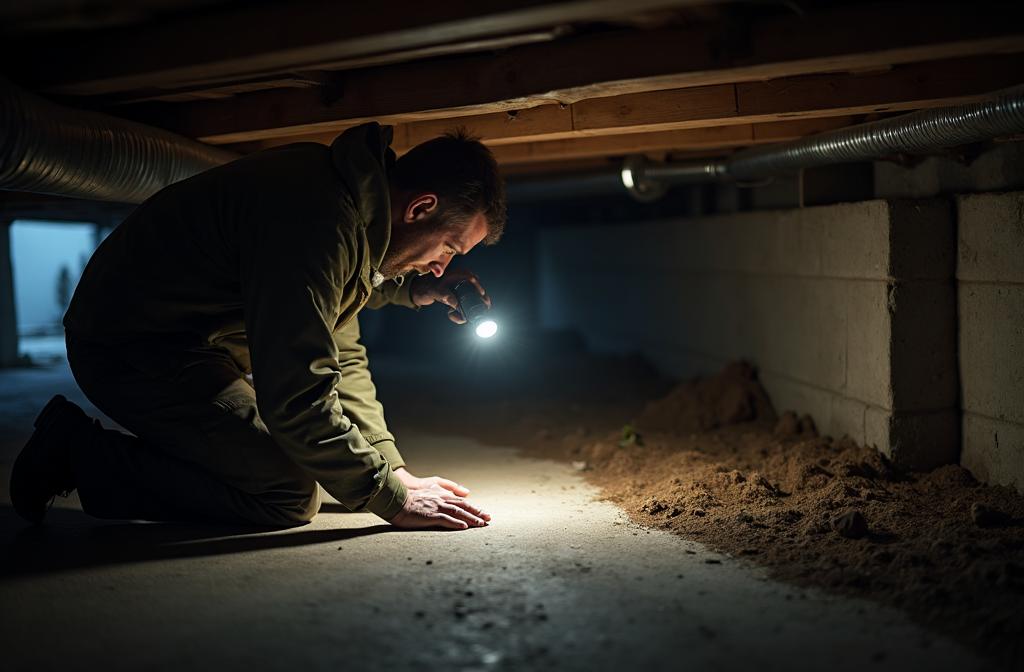
We inspect your entire crawlspace — floor joists, foundation walls, existing vapor barrier, vents, plumbing, and HVAC. We document moisture readings and identify any existing damage. You receive a full written report with photos and a detailed proposal before we ask for a single decision.
Prep & Debris Removal
We remove any existing failed vapor barrier, debris, and standing water. If there is existing mold on joists or structure, we treat it before encapsulation. A clean, dry substrate is the foundation of an encapsulation that lasts.
Liner & Wall Installation
We install 20-mil reinforced polyethylene liner across the entire crawlspace floor with 12-inch overlaps at all seams, fully taped. The liner runs up every foundation wall and is fastened at the top. Piers are wrapped. Every penetration — pipes, posts, supports — is sealed around.
Conditioning, Dehumidification & Vent Sealing
Existing foundation vents are sealed with rigid foam and spray foam. A properly sized dehumidifier or supply duct from your HVAC is installed to maintain the encapsulated space at under 60% relative humidity year-round. We walk you through maintenance and provide a written care guide.
What Our Customers Say
"We had a musty smell in our house for years and couldn't figure out where it was coming from. The Outdoors Group inspected our crawlspace and found the original vapor barrier had completely deteriorated. After encapsulation the smell was gone within two weeks. Wish we'd done it years ago."
— Brian T., Carrollton, GA
"David came out, crawled the entire space himself, showed us photos of what he found, and gave us a written quote that didn't change. The crew was in and out in one day and the quality of work was excellent."
— Melissa F., Douglasville, GA
"Our energy bills dropped noticeably after encapsulation. The crawlspace went from feeling like a swamp to completely dry. Worth every penny and I'd recommend TOG to anyone."
— Chris W., Newnan, GA
Crawlspace Encapsulation — Frequently Asked Questions
Most projects: $3,000–$8,000
Exact cost depends on square footage, existing conditions, and whether drainage or dehumidification is needed. Free on-site inspection and written quote included — no obligation.
Related Services
Request Your Free Crawlspace Inspection
Get Your Free Inspection