
Wildlife Exclusion: How to Permanently Keep Animals Out
February 18, 2026
A homeowner in Peachtree City called us for the third time in eighteen months. She'd had squirrels removed by another company twice — once in spring 2024, again in fall 2024. Each time, the company trapped the squirrels and patched the obvious hole. Each time, the squirrels came back within weeks, entering through a different spot. By the time she called us, she'd spent over $1,200 on two failed removal attempts and had accumulated significant attic damage from three separate squirrel families.
Her frustration is something we hear every week. And the root cause is always the same: trapping without exclusion. Removing animals is easy. Keeping them out permanently requires a completely different approach — one that most homeowners (and some wildlife companies) don't fully understand.
What Is Wildlife Exclusion?
Wildlife exclusion is the process of systematically identifying and permanently sealing every potential entry point on your home's exterior. The goal isn't just to close the hole the animal is currently using — it's to eliminate every vulnerability the next animal might exploit.
A thorough exclusion addresses your entire building envelope — every surface and joint from the foundation to the ridge cap. This includes:
- Soffit and fascia joints. The junction between your soffit panels and fascia boards is the most common entry point for squirrels and raccoons in Metro Atlanta homes.
- Gable vents. Standard gable vent screens are made of lightweight aluminum or plastic that squirrels chew through easily.
- Roof vents and turbines. Plastic roof vents are vulnerable to raccoon damage.
- Ridge vents. Improperly installed ridge vents leave gaps that bats, birds, and insects exploit.
- Roofline intersections. Where dormers, additions, or different roof planes meet, construction gaps are almost always present.
- Pipe and utility penetrations. Every plumbing stack, HVAC line, electrical conduit, and cable entry creates a potential entry point.
- Foundation and crawlspace. Foundation cracks, deteriorated mortar joints, crawlspace access doors, and gaps around ground-level utilities give rodents, opossums, and snakes access.
- Chimney gaps. The junction between the chimney and the roofline is a common raccoon and squirrel entry point.
Why DIY Exclusion Almost Always Fails
The Peachtree City homeowner tried DIY exclusion between her first and second professional removal attempts. She bought expanding foam, steel wool, and hardware cloth from a hardware store and spent a weekend sealing every hole she could find on her roofline. The squirrels were back within ten days.
Here's why DIY exclusion fails — and we see this pattern repeatedly across every county we serve:
You can't find what you can't see. Homeowners typically identify 1–3 obvious entry points — the holes they can see from the ground or from a ladder. A professional exclusion inspection routinely identifies 8–15 potential entry points on a standard home.
DIY materials don't hold. Expanding foam is the most commonly used DIY sealant — and the most useless against wildlife. Squirrels chew through cured expanding foam in minutes. Rats gnaw through it overnight. Raccoons simply tear it out with their hands.
Timing matters. Sealing entry points while animals are still inside traps them. A trapped raccoon will tear through fascia, soffit, and even roof decking to escape.
How Professional Exclusion Works: Our 4-Step Process
At The Outdoors Group, exclusion is built into every wildlife removal project. Here's our process, refined over 15+ years and thousands of homes across Metro Atlanta:
Step 1: Full-Perimeter Inspection
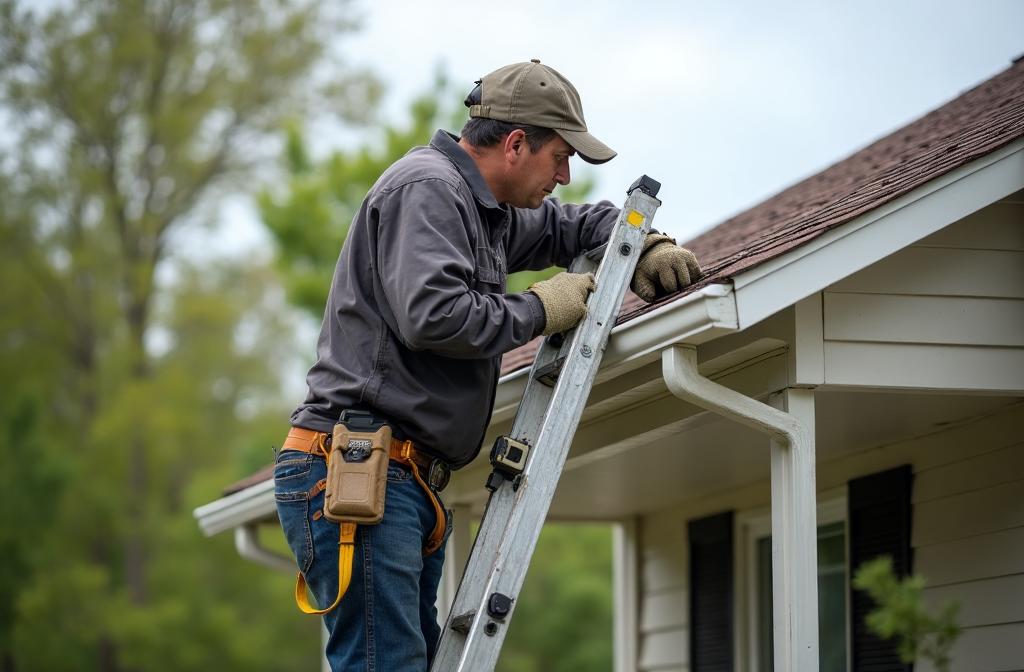
Our licensed technician inspects every inch of your home's exterior, from the foundation to the ridge cap. We use extension ladders, roof access equipment, and — when needed — drone imaging to inspect high or complex rooflines. Every potential entry point is documented with photos and notes.
This inspection typically takes 45–90 minutes for a standard home and is always free. We're not just looking for where animals got in — we're identifying every place they could get in next.
For the Peachtree City home, our inspection identified 11 potential entry points. The homeowner had found and attempted to seal 3 of them. The squirrels had re-entered through a gap behind a downspout at a roofline intersection — a spot completely invisible from the ground.
Step 2: Active Wildlife Removal
If animals are currently inside, we remove them before sealing. Our removal methods depend on the species:
- Squirrels: One-way exclusion devices installed at active entry points. Squirrels leave naturally to forage but can't get back in. Typical exclusion period: 3–5 days.
- Raccoons: Live trapping combined with exclusion. If babies are present, we use reunion techniques — placing babies in a heated box near the entry point so the mother relocates them naturally.
- Bats: One-way exclusion devices (bat valves) installed at primary exit points. Georgia law prohibits bat exclusion during maternity season (May 1 – August 15) to protect non-flying pups.
- Rodents: Trapping combined with exclusion. We use snap traps — not poison — to remove existing populations while simultaneously sealing entry points.
Step 3: Permanent Sealing
This is where the real work happens — and where professional exclusion differs dramatically from DIY attempts. We seal every identified entry point using materials and techniques specifically designed to resist wildlife:
Galvanized steel flashing and sheeting. For soffit, fascia, and roofline gaps, we fabricate custom galvanized steel patches that are screwed (not nailed) into place and sealed at the edges. Squirrels and raccoons cannot chew through galvanized steel.
Commercial-grade steel screening. For vents, we replace builder-grade screens with heavy-gauge galvanized steel screening (16-gauge or heavier). This screening resists chewing, clawing, and pulling.
Construction-grade sealants. For smaller gaps around pipes and utilities, we use polyurethane-based sealants rated for exterior use and UV resistance — not expanding foam.
Drip edge and flashing installation. For roofline vulnerabilities, we install or replace drip edge and flashing to eliminate the gap between the roof deck and fascia board.
All repairs are blended to match your home's existing materials and colors. When we're done, you shouldn't be able to tell where the exclusion work was performed.
Step 4: Guarantee
Our exclusion work is backed by our 100% written guarantee. If animals re-enter through any sealed entry point, we return at no charge to re-seal and remove.
The ROI of Professional Exclusion
Is exclusion worth the investment? Let's look at the numbers:
Typical exclusion cost: $800–$2,500 for a standard residential home, depending on size, complexity, and number of entry points. This is a one-time investment for permanent protection.
Cost of repeated removal without exclusion: $300–$500 per removal call. Most homeowners who don't get exclusion end up calling 2–3 times before switching to a company that includes it. Total cost: $600–$1,500+ in removal fees alone, plus the accumulating damage costs.
Cost of wildlife damage: Each re-entry event causes additional damage. Insulation contamination, wiring damage, roof damage, and ductwork damage from a single animal family can range from $500 to $3,000+. Two or three re-entries can easily total $5,000–$10,000 in cumulative damage.
The math: A $1,500 exclusion prevents an average of $3,000–$8,000 in future damage and removal costs. The ROI is typically 200–500% over five years.
The Peachtree City homeowner spent $1,200 on two failed removal attempts before calling us. Our exclusion, which included removal, full-perimeter sealing, and minor attic repair, cost $1,800. She hasn't had a wildlife issue since — and that was over a year ago.
Seasonal Exclusion Timing in Georgia
Timing matters for exclusion, especially when protected species are involved:
- September–November: Ideal exclusion season. Most baby animals are independent, bat maternity season is over, and you're sealing before winter when animals are most motivated to enter.
- December–February: Good for exclusion of rodents and general sealing, but be cautious about squirrels — they may have winter litters.
- March–April: Squirrel baby season. Exclusion must account for potential babies in the attic. Bat exclusion is still legal until May 1.
- May–August: Bat exclusion is prohibited during maternity season. Squirrel and raccoon exclusion is possible but must account for summer litters.
We perform exclusion year-round, adjusting our approach based on seasonal wildlife behavior. Our technicians know exactly how to handle each species during each season.
Why The Outdoors Group for Exclusion
Exclusion is our specialty — not an afterthought. Here's what sets us apart:
- In-house crews. Our own roofing, carpentry, and wildlife teams handle every aspect of exclusion. No subcontractors, no delays, no finger-pointing.
- Full-perimeter approach. We don't just patch the obvious hole. We seal the entire building envelope.
- Professional-grade materials. Galvanized steel, commercial screening, and construction-grade sealants that last decades.
- Written guarantee. If animals get back in through our work, we return at no charge.
- 15+ years of experience. We've sealed thousands of homes across 12 counties in Metro Atlanta and West Georgia.
Call (770) 545-4388 today or schedule your free inspection. Let us show you every vulnerability on your home — and seal them all permanently.