
Scratching in Your Walls? How to Identify the Animal
February 18, 2026
A family in Marietta called us last October after living with scratching sounds inside their master bedroom wall for almost a month. They'd convinced themselves it was just the house settling — old homes make noises, right? Then one morning their seven-year-old daughter walked into the kitchen and found a rat sitting on the counter. That's when they picked up the phone.
By the time we opened up the wall, we found a full-blown rat highway. The rodents had been using the wall cavity between the first and second floor as a travel corridor, running from a gap at the roofline all the way down to the crawlspace. They'd chewed through the vapor barrier, gnawed on three electrical wires, and left droppings throughout the insulation. The damage cost $3,200 to fully repair. If they'd called when the scratching started, we could have resolved it for under $600.
Stories like this play out across Metro Atlanta every week. Wall scratching is the second most common wildlife complaint we receive (after attic noises), and it's one homeowners tend to ignore longer — because it's easier to dismiss a faint sound inside a wall than heavy thumping overhead.
What Animals Get Inside Walls?
Wall cavities are surprisingly accessible to wildlife. Your walls aren't solid — they're hollow spaces between studs, and animals exploit them as highways, den sites, and nesting areas. Here's what we find most often:
Mice are the most common wall invaders in Georgia homes. The house mouse can squeeze through a gap as small as a dime — about 6mm. Once inside, they use wall cavities to travel between floors and rooms, often running along electrical wires and plumbing pipes for traction. You'll hear light, rapid scratching, often described as a "scrabbling" sound. Activity is heaviest at night, but mice in walls can be heard during the day too.
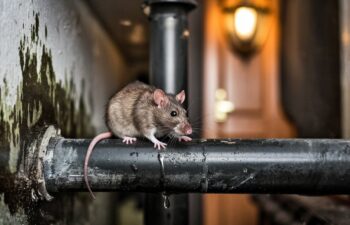
Rats — both Norway rats and roof rats — are larger and louder than mice. Norway rats typically enter from ground level (foundation gaps, garage doors, utility penetrations) and travel upward through walls. Roof rats enter from the roofline and travel downward. Both species create well-worn travel paths and you'll hear scratching and gnawing in the same locations repeatedly. Rats can squeeze through a hole the size of a quarter.
Squirrels sometimes fall into wall cavities from the attic. They enter the attic through a gap at the roofline, then fall down into the space between interior and exterior walls. Their scratching is louder and more frantic than rodent scratching — they're essentially trapped and trying to climb out. You may also hear chattering, barking, and panicked scrambling.
Bats can roost inside wall voids, especially in older homes where gaps exist between the interior wall and the exterior sheathing. Georgia's most common attic bat — the big brown bat — is small enough to crawl into wall spaces through gaps at the top plate. You'll hear faint scratching and occasional high-pitched squeaking, usually at dusk and dawn.
Raccoon babies are sometimes born inside wall cavities when the mother finds access through a soffit or attic gap. Baby raccoons produce distinctive crying, whining, and chittering sounds that are often mistaken for a bird or cat. If you hear crying sounds inside a wall between March and June, baby raccoons are a strong possibility.
How Animals Get Into Your Walls
Understanding how animals enter walls helps explain why the problem is so common — and why professional help is necessary to stop it:
- From the attic down: This is the most common pathway. Animals enter the attic through gaps in the roofline, then travel down through wall cavities. The top plate (the horizontal framing member at the top of each wall) often has gaps where wires and pipes pass through, giving animals easy access from attic to wall.
- From the crawlspace up: Rodents in particular travel upward from crawlspaces through wall cavities. Gaps around plumbing stacks and HVAC chases provide access.
- Through exterior walls directly: Construction gaps where siding meets trim, gaps around window and door frames, and deteriorated mortar joints in brick veneer all provide direct entry into wall cavities.
- Through utility penetrations: Every pipe, wire, and cable that enters your home creates a potential entry point. Most are sealed during construction, but sealants deteriorate over time.
The Real Risks of Animals in Your Walls
Wall-dwelling animals create several serious problems that escalate the longer they're present:
Fire hazard from chewed wiring. This is the most dangerous risk. Rodents must gnaw constantly to keep their teeth from overgrowing, and electrical wiring is one of their favorite targets. The plastic insulation on Romex wiring is particularly attractive to rats and mice. According to the National Fire Protection Association, rodent-damaged wiring causes an estimated 20,000+ house fires annually in the United States. In a wall cavity, a short-circuited wire is inches from wood studs and paper-faced insulation — ideal fuel for a fire.
Insulation contamination. Animals in walls urinate and leave droppings as they travel. This contamination soaks into insulation, reducing its R-value and creating persistent odors. In severe cases, urine can stain drywall and produce visible discoloration on interior walls.
Odor from deceased animals. Animals — especially mice and rats — frequently die inside walls. A single dead rat can produce an overpowering odor that lasts 2–4 weeks. Dead animals also attract secondary pests: flies, beetles, and their larvae. If you're smelling something terrible and can't find the source, a dead animal in the wall is the most likely explanation.
Structural damage. Over time, rodents enlarge entry holes, weaken framing members with gnaw damage, and create pathways for moisture intrusion. What starts as a small gap becomes a significant opening that admits not just animals but also water, air, and insects.
Health risks. Rodent droppings carry hantavirus, salmonella, and leptospirosis. Bat guano in wall voids produces histoplasmosis spores. Raccoon droppings carry Baylisascaris roundworm. All of these contaminants can become airborne and enter your living space through gaps around outlets, light switches, and baseboards.
What NOT to Do About Scratching in Your Walls
When homeowners try to handle wall wildlife on their own, they frequently make the problem worse. Here are the most common mistakes we see:
Don't cut open the wall yourself. You don't know what's in there, where it is, or whether it will come out aggressively. Cutting into a wall with a raccoon or rat on the other side of the drywall creates a much worse situation. You may also cut into wiring or plumbing.
Don't use poison. This is the single worst piece of advice on the internet. If a rat eats poison and dies inside your wall, you can't reach it. The smell is unbearable for 2–4 weeks, and the carcass attracts flies and secondary pests. Plus, poisoned rodents often stumble outside where they're eaten by hawks, owls, and neighborhood pets — spreading the poison up the food chain.
Don't use ultrasonic repellent devices. Multiple independent studies have shown these devices have no measurable effect on rodent behavior. Save your money.
Don't seal exterior holes without confirming the animal is out. Sealing an animal inside your wall guarantees more damage. Trapped animals chew through drywall, wiring, and anything else to escape. A trapped squirrel can chew through drywall and enter your living space within hours.
Don't wait and hope it goes away. Animals in your walls are there because they have a food source, a travel route, or a nesting site. They won't leave voluntarily. Every day you wait, the damage increases and the infestation grows.
The Professional Wall Extraction Process
Here's exactly how The Outdoors Group handles animals in walls — a process we've refined over 15+ years of serving Metro Atlanta:
- Inspection and identification. We use thermal imaging, borescope cameras, and physical inspection to identify the animal, locate its position in the wall, and determine how it entered. We inspect the entire building envelope — roofline, soffits, foundation, crawlspace — to find every entry point.
- Removal strategy. Depending on the species and situation, we may use one-way exclusion devices at entry points, live traps placed at travel corridors, or direct extraction through a small, strategic wall opening. For raccoon babies, we use a reunion technique that allows the mother to relocate her young naturally.
- Animal removal. We remove the animal humanely. We never use poisons or inhumane methods. If babies are present, we ensure they're safely reunited with the mother or transferred to a licensed rehabilitator.
- Entry point sealing. Every entry point — from the primary breach to secondary vulnerabilities we identified during inspection — is sealed with galvanized metal, commercial-grade screening, or construction-grade materials that animals can't chew through.
- Damage repair. Chewed wiring is replaced by a qualified electrician. Contaminated insulation is removed and replaced. Any structural damage is repaired. Drywall openings are patched and finished.
- Sanitization. Affected areas are treated with professional-grade sanitizers and deodorizers to eliminate bacteria, parasites, and odors from animal waste.
Cost of Professional Wall Extraction in Metro Atlanta
Costs vary based on the animal, the extent of damage, and the complexity of the extraction. Here are typical ranges for the Metro Atlanta area:
- Rodent removal and exclusion: $400–$800 for a standard home. Includes trapping, entry point sealing, and basic cleanup.
- Squirrel extraction from walls: $500–$1,200. May require strategic wall opening and always includes full exclusion.
- Raccoon baby extraction: $600–$1,500. Includes mother trapping, baby removal, reunion technique, and full sealing.
- Full wall restoration (severe cases): $1,500–$4,000+. Includes insulation replacement, wiring repair, drywall repair, and sanitization.
Every project starts with a free inspection. We provide a written proposal with all costs before any work begins — no surprises.
Prevention: How to Keep Animals Out of Your Walls
Once we've removed the animal and sealed your home, here are ongoing steps to prevent future wall invasions:
- Annual [wildlife inspection](/blog/are-you-letting-pests-walk-right-in-why-you-need-a-professional-wildlife-home-inspection-today/). A professional inspection catches new vulnerabilities before animals exploit them.
- Trim tree branches. Keep branches at least 8 feet from your roofline. Squirrels and rats use branches as bridges to your roof.
- Secure crawlspace access. Install a secure, animal-proof crawlspace door and inspect it seasonally.
- Monitor utility penetrations. Check around pipes, wires, and cables entering your home annually. Reseal any deteriorated caulk or foam.
- Address moisture issues. Animals are attracted to moisture sources. Fix leaking hose bibs, repair downspout drainage, and ensure crawlspace ventilation is adequate.
Get Help Today
If you're hearing scratching in your walls — any scratching, at any time of day — don't wait. The damage is growing every day. The Outdoors Group provides free inspections across Metro Atlanta and West Georgia, covering Fulton, Cobb, Douglas, Paulding, Fayette, Coweta, Clayton, Henry, DeKalb, and surrounding counties.
We handle everything in-house — no subcontractors, no referrals, no runaround. From inspection to extraction to repair to exclusion, one team does it all. And every job is backed by our 100% written guarantee.
Call (770) 545-4388 today or schedule your free inspection. That scratching sound isn't going to stop on its own.