Attic Restoration After Wildlife Damage: The Complete Guide
February 18, 2026
Last fall, we completed a wildlife removal job at a home in Newnan — a 2,400-square-foot ranch built in the early 2000s. The homeowner had called us about raccoons in the attic. We removed the raccoons and sealed the entry points within a week. But when our crew went into the attic to inspect the full extent of the damage, the real scope of the problem became clear.
The raccoons had been living in the attic for an estimated four to six months. They'd crushed and flattened about 60% of the blown-in insulation. Three separate latrine sites — raccoons designate specific bathroom areas — contained several pounds of droppings contaminated with Baylisascaris roundworm. Two HVAC flex ducts had been torn open, meaning the family had been breathing air that passed over contaminated insulation for months. The attic smelled like a barn.
The homeowner's initial reaction was common: "Can't we just spray some disinfectant up there and add new insulation on top?" The answer is no — and understanding why is what this guide is all about.
Why Attic Restoration Is Necessary After Wildlife Removal
Getting the animals out of your attic is only half the battle. What they leave behind — contaminated insulation, accumulated droppings, damaged wiring, torn ductwork, chewed wood, and lingering odors — poses ongoing health risks and structural problems. Here's why you can't just "leave it":
Contaminated insulation doesn't clean itself. Animal urine saturates insulation, reducing its thermal performance (R-value) by 30–50%. Droppings embedded in insulation harbor bacteria, parasites, and fungal spores that remain viable for years — even after the animals are gone. Adding new insulation on top of contaminated insulation is like putting a fresh bandage on an infected wound.
Health hazards persist. Bat guano produces Histoplasma capsulatum spores that cause histoplasmosis — a serious respiratory infection. Raccoon droppings contain Baylisascaris procyonis (raccoon roundworm) eggs that can survive in the environment for years and cause severe neurological damage if accidentally ingested. Rodent waste harbors hantavirus and salmonella. These contaminants become airborne through your HVAC system and enter your living space through ceiling penetrations, light fixtures, and attic access doors.
Pheromone trails attract new wildlife. Animals leave scent markers — urine, gland secretions, and droppings — that signal "this is a safe den site" to other animals. Even after the original animals are removed and entry points sealed, these scent trails persist in contaminated insulation. We've seen cases where new animals chewed through fresh exclusion work specifically because they could smell the pheromones inside. Complete insulation removal and sanitization eliminates these scent trails.
Energy costs increase. Compressed, displaced, and urine-soaked insulation loses its ability to regulate temperature. Homeowners with wildlife-damaged attics consistently report 20–30% higher energy bills. In Georgia's hot summers, a poorly insulated attic can raise interior temperatures by 5–10°F, forcing your HVAC system to work overtime.
What Does Professional Attic Restoration Include?
A complete attic restoration after wildlife damage involves several critical steps, each addressing a specific problem left behind by the animals:
Step 1: Contaminated Insulation Removal
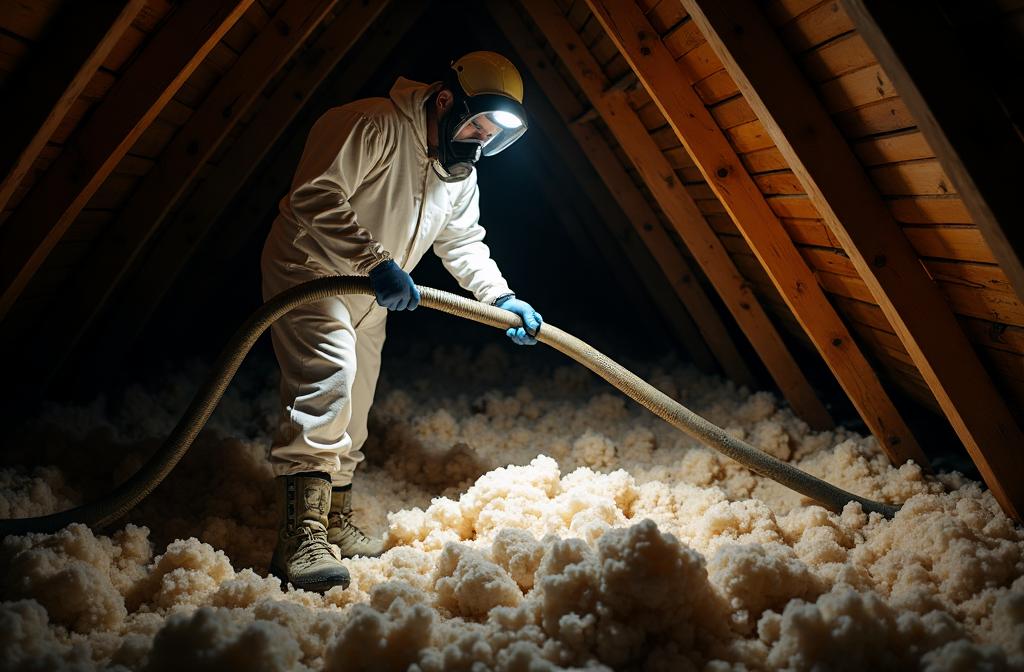
All wildlife-contaminated insulation is removed from the attic. For blown-in insulation (the most common type in Metro Atlanta homes), we use industrial-grade insulation vacuum systems — large truck-mounted machines that suction contaminated insulation through a 4-inch hose directly into a collection bag on our truck. This process is contained, meaning contaminated material doesn't pass through your living space.
For batt insulation (fiberglass rolls), contaminated sections are carefully removed by hand in sealed bags. We remove all insulation within the contaminated zone, plus a buffer area, to ensure complete removal of soiled material.
The Newnan job required removing approximately 1,800 square feet of blown-in insulation — nearly the entire attic. The three raccoon latrine sites had contaminated insulation well beyond their visible boundaries, and urine had spread through capillary action to areas that appeared clean on the surface. Our policy is to err on the side of complete removal rather than risk leaving contaminated material behind.
Step 2: Dropping and Debris Removal
After insulation removal, all animal droppings, nesting material, food caches (squirrels store acorns and nuts), and debris are manually removed from attic surfaces. For raccoon latrines, this involves careful collection of droppings using appropriate PPE (personal protective equipment) — full Tyvek suits, P100 respirators, and sealed gloves — because of the Baylisascaris risk.
Bat guano removal follows strict protocols due to histoplasmosis risk. The guano is dampened before removal to minimize airborne spore generation, and the area is kept under negative pressure during the process.
Step 3: Sanitization and Deodorization
Once insulation and debris are removed, all attic surfaces — rafters, joists, sheathing, and the attic floor (top of the ceiling drywall) — are treated with professional-grade enzyme-based sanitizers. These products break down the proteins in animal urine and droppings at the molecular level, eliminating bacteria, neutralizing odors, and destroying pheromone markers.
We use a two-stage process: first an antimicrobial treatment that kills bacteria and parasites, then an enzyme-based deodorizer that eliminates residual odors. This is critical — household bleach and commercial deodorizers don't penetrate deeply enough to neutralize contaminants absorbed into wood surfaces.
For the Newnan job, sanitization alone took a full day. The raccoon urine had soaked into the ceiling joists in several areas, requiring multiple treatment applications to fully neutralize.
Step 4: Damage Repair
With the attic clean and sanitized, we address all physical damage:
Wiring repair or replacement. Chewed electrical wires are replaced to code specifications. This is a critical safety step — exposed or damaged wiring in an attic full of dry insulation is a fire waiting to happen. Our team works with licensed electricians when full circuit replacement is needed.
Ductwork repair. Torn, crushed, or disconnected HVAC flex ducts are repaired or replaced. Damaged ductwork means your heating and cooling system is dumping conditioned air into the attic instead of your rooms — wasting energy and money.
Structural wood repair. Chewed or weakened rafters, joists, and framing members are reinforced or replaced. Raccoons and squirrels can cause significant structural damage over time.
Vapor barrier repair. If the attic has a vapor barrier, damaged sections are replaced to prevent moisture problems.
Step 5: New Insulation Installation
Fresh insulation is installed to meet or exceed current Georgia energy code requirements (R-38 for attic floors in our climate zone). We typically install blown-in cellulose or fiberglass, which provides excellent coverage and thermal performance.
New insulation after wildlife removal often performs better than what was originally in the home, because we're installing to current standards and ensuring complete, even coverage. Many older homes in Metro Atlanta have insulation that was already under-performing before the wildlife arrived.
Step 6: Air Sealing
While the insulation is out and the attic floor is accessible, we seal all penetrations between the attic and living space — around light fixtures, plumbing stacks, electrical boxes, HVAC chases, and the attic access door. This "air sealing" step prevents attic air (and any residual contaminants) from entering your living space, and it dramatically improves your home's energy efficiency.
Energy Savings After Attic Restoration
Homeowners are often surprised by how much their energy bills drop after attic restoration. The combination of removing degraded insulation, installing fresh insulation to current standards, sealing air leaks, and repairing ductwork typically results in measurable energy savings:
- Average energy bill reduction: 20–30% in the first year after restoration
- HVAC system longevity: Reduced workload extends the life of your heating and cooling equipment
- Comfort improvement: Rooms that were always too hot in summer or too cold in winter normalize once attic insulation is properly restored
The Newnan homeowner reported a $60/month reduction in energy bills after restoration — more than $700 per year. Over five years, the energy savings alone offset a significant portion of the restoration cost.
Does Insurance Cover Attic Restoration?
This is one of the most common questions we receive. The answer depends on your specific policy, but here's what we've seen across Metro Atlanta:
Many homeowner's policies cover damage repair resulting from wildlife — including insulation replacement, wiring repair, and ductwork repair — if you can demonstrate the damage was caused by an animal intrusion. Policies generally do not cover the wildlife removal itself, but they often cover the restoration work.
Documentation is key. We provide detailed invoices, itemized damage reports, and photographs documenting the contamination and damage. Many of our customers have successfully filed claims and received partial or full reimbursement for restoration costs.
File early and be specific. Report the damage to your insurance company as "animal damage requiring insulation replacement and decontamination" rather than "pest control." The language matters. Provide our detailed documentation, and follow up persistently.
We've seen successful claims ranging from $1,500 to $6,000 for attic restoration across Coweta, Fayette, Cobb, and Douglas counties. It's always worth filing.
Why DIY Attic Cleanup Is Dangerous
We strongly advise against DIY attic restoration after wildlife damage. Here's why:
Respiratory hazards. Disturbing contaminated insulation releases particles, bacteria, fungal spores, and dried fecal material into the air. Without proper respiratory protection (P100 respirators or PAPR systems), you're inhaling these contaminants directly. Histoplasmosis from bat guano and hantavirus from rodent droppings are both contracted through inhalation.
Parasite exposure. Raccoon roundworm (Baylisascaris) eggs are microscopic and can be accidentally ingested through hand-to-mouth contact during cleanup. Infection causes severe neurological damage. Professional crews use full containment procedures specifically to prevent exposure.
Inadequate equipment. Proper insulation removal requires industrial vacuum systems. Attempting to bag insulation by hand in a hot, cramped attic is exhausting, inefficient, and dramatically increases your exposure to contaminants. A job that takes our crew one day with proper equipment would take a homeowner a week of dangerous, uncomfortable work.
Incomplete cleanup. Without professional sanitizers and deodorizers, residual contamination remains in the wood surfaces. Household products don't penetrate deeply enough to neutralize urine-soaked joists and sheathing. The smell may temporarily improve but will return — and the health hazards persist.
The Outdoors Group Difference
We handle every aspect of attic restoration in-house — no subcontractors, no referrals, no waiting for third-party crews. From wildlife removal to exclusion to insulation removal to sanitization to new insulation installation, our licensed, insured crew does it all.
Because we also performed the wildlife removal and exclusion, we guarantee the complete job. Our 100% written guarantee covers the removal, the sealing, and the restoration. If animals re-enter through a sealed entry point, we return at no charge.
We've restored hundreds of attics across Metro Atlanta and West Georgia since 2009. We serve Fulton, Cobb, Douglas, Paulding, Fayette, Coweta, Clayton, Henry, DeKalb, Rockdale, Gwinnett, and Forsyth counties — and every job starts with a free, no-obligation inspection.
Call (770) 545-4388 today or schedule your free inspection online. Let us show you what's in your attic — and what it will take to make it clean, safe, and energy-efficient again.