
Are You Letting Pests Walk Right In? Why You Need a Professional Wildlife Home Inspection Today!
February 2025
A homeowner in Woodstock decided to do a self-inspection of her home after reading an article about wildlife prevention online. She walked around the exterior, looked at the roofline, checked the foundation, and concluded that her home was secure. No obvious holes, no gaps, no damage.
Six weeks later, she heard scurrying in her attic. She called us. Our technician spent 90 minutes inspecting her home's exterior — and identified nine potential entry points she had missed entirely. The squirrels had entered through a 1.5-inch gap behind a downspout where it crossed a roofline intersection — a spot that was physically impossible to see from the ground.
What a Professional Wildlife Inspection Covers
The Roofline
Soffit-to-fascia junction. The #1 entry point for squirrels and raccoons in Metro Atlanta.
Gable vents. Standard screens are easily chewed through. We check material, mounting, and surrounding wood.
Roof vents. Plastic roof vents are vulnerable to raccoon damage.
Ridge vent. Improperly installed ridge vent creates gaps for bats.
Roofline intersections. Hidden construction gaps behind trim, flashing, and gutters.
Chimney junction. Deteriorated flashing creates gaps.
The Foundation and Crawlspace
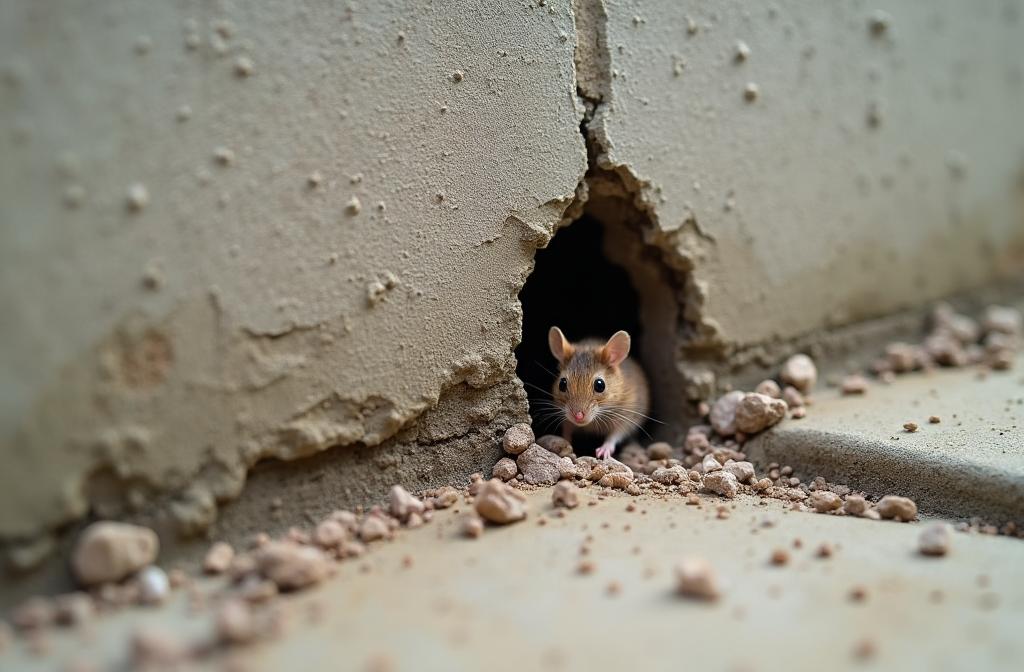
Foundation cracks. Settling cracks provide entry for mice (which need only a 6mm gap).
Foundation vents. Deteriorated screens or missing covers are open invitations for rats, mice, opossums, and snakes.
Crawlspace access door. Many are flimsy, ill-fitting, or improperly secured.
Utility penetrations. Builder-grade sealants deteriorate within 5–10 years.
Why You Can't Do This Yourself
Access limitations. Many entry points are 15–30 feet off the ground, behind gutters, above soffits.
Visibility. The most vulnerable entry points are hidden — behind downspouts, under drip edge, at construction joints.
Size perception. A mouse needs only 6mm. A bat needs 3/8 inch. A squirrel needs 1.5 inches. What looks insignificant from the ground is a wide-open door to wildlife.
The Woodstock homeowner's self-inspection missed 9 out of 9 actual entry points.
What We Find During Inspections
Homes 0–10 years old: Average 3–5 vulnerabilities.
Homes 10–20 years old: Average 5–8 vulnerabilities.
Homes 20+ years old: Average 8–15 vulnerabilities.
The Cost of Not Inspecting
A professional wildlife inspection with The Outdoors Group is free. Compare that to the cost of wildlife intrusion:
- Average squirrel removal and repair: $500–$2,000
- Average raccoon removal and repair: $1,000–$4,000
- Average bat colony exclusion and restoration: $2,000–$7,000
- Average rodent removal and exclusion: $400–$1,200
When to Schedule an Inspection
- Annually as preventive maintenance — ideally in early fall
- After purchasing a new home
- After storms or high winds
- When you notice increased wildlife activity
Schedule Your Free Inspection Today
The Outdoors Group provides free, comprehensive wildlife inspections across Metro Atlanta and West Georgia. All exclusion work is backed by our 100% written guarantee.
Don't wait until you hear scratching in your walls or thumping in your attic. Let us find the gaps before the animals do.
Call (770) 545-4388 or schedule your free inspection online. It takes 60–90 minutes, costs nothing, and could save you thousands.