
Animal in Your Crawl Space? Here's What to Do
February 19, 2026
A homeowner in Fayetteville called us one February morning after noticing a strong, musky odor rising through her kitchen floor. She'd smelled it for about a week but assumed it was a plumbing issue. When the plumber came out and found nothing wrong with her pipes, he suggested she check the crawlspace. She opened the access door, shone a flashlight inside, and came face-to-face with an opossum curled up on top of her HVAC ductwork, about four feet from the opening.
She slammed the door shut and called us. When our technician arrived and did a full crawlspace inspection, the situation was worse than a single opossum. The animal had torn through about 30 feet of vapor barrier, shredded sections of fiberglass batt insulation hanging between the floor joists, and left droppings throughout the space. The torn vapor barrier had allowed ground moisture to rise unchecked, and we found visible mold growth on two floor joists near the HVAC unit.
Her story illustrates why crawlspace wildlife is so destructive — and so easy to overlook. Your crawlspace is out of sight and out of mind, which means animals can live there for weeks or months before you notice. By then, the damage is significant.
Why Animals Love Your Crawlspace
Your crawlspace provides everything wildlife needs: darkness, shelter from predators, protection from weather, and proximity to food and water sources. In Georgia's climate, crawlspaces stay relatively cool in summer and warm in winter — making them attractive year-round.
Most Metro Atlanta homes built before 2010 have vented crawlspaces with basic vapor barriers and minimal security. Crawlspace access doors are often flimsy, vent screens deteriorate, and foundation gaps develop as homes settle. For wildlife, getting in is easy.
Common Crawlspace Invaders in Metro Atlanta
Raccoons are the most destructive crawlspace invaders we encounter. They're powerful enough to rip through vapor barriers, crush ductwork, and tear apart insulation. Raccoons create designated latrine sites, and their droppings carry Baylisascaris roundworm — a parasite that can cause severe neurological damage in humans. A single raccoon can cause $2,000–$5,000 in crawlspace damage in a matter of weeks.
Opossums are the most common crawlspace denners. They're attracted to the dark, enclosed space and often den beneath homes during winter months. While less destructive than raccoons, opossums still damage vapor barriers and insulation, leave droppings and urine, and carry fleas and ticks that migrate into your living space.
Rats and mice use crawlspaces as staging areas to access the rest of your home. They enter through foundation vents, gaps around utility penetrations, and cracks in the foundation wall. From the crawlspace, they travel up through wall cavities to reach attics, kitchens, and living areas.
Snakes follow rodent prey into crawlspaces. If you have a rodent problem under your home, there's a good chance snakes are present too. Georgia is home to six venomous snake species, including copperheads and timber rattlesnakes, both of which are found in crawlspaces across Metro Atlanta.
Feral cats occasionally take up residence in crawlspaces, especially in suburban and semi-rural areas. They cause less structural damage than raccoons but leave urine odors and attract fleas.
Skunks den under homes and in crawlspaces, particularly during breeding season (February–March). The odor from a single spray event can permeate your entire home and persist for weeks.
Signs of an Animal in Your Crawlspace
Because crawlspaces are rarely inspected, animals can live there undetected for weeks. Watch for these warning signs:
- Unusual odors rising through floors. Musky, ammonia-like, or "barnyard" smells coming through your flooring — especially in bathrooms and kitchens where floor penetrations exist — indicate animal activity below.
- Scratching, thumping, or scurrying sounds from below. Sounds coming from under your floor (rather than above your ceiling) point to crawlspace invaders.
- Torn or displaced vapor barrier visible at the crawlspace access door.
- Increased pest activity inside your home. A sudden appearance of fleas, ticks, or mites inside your home often traces back to wildlife in the crawlspace.
- Unexplained cold spots or drafts on floors. Damaged insulation beneath your floor loses its thermal barrier.
- Higher energy bills. Damaged crawlspace insulation and torn ductwork force your HVAC system to work harder, increasing energy costs by 15–25%.
- Visible droppings near foundation vents or the access door.
The Hidden Danger: Moisture and Mold
The most expensive consequence of crawlspace wildlife isn't the animal damage itself — it's the moisture problem that follows. Here's the cascade:
- Animal tears through vapor barrier. The vapor barrier (6-mil polyethylene sheeting) is designed to prevent ground moisture from rising into the crawlspace and your home's structure.
- Ground moisture rises unchecked. Georgia's climate produces significant ground moisture, especially during our wet spring and summer months. Without an intact vapor barrier, relative humidity in the crawlspace can exceed 70–80%.
- Mold growth begins. At sustained humidity above 60%, mold colonies begin forming on floor joists, subfloor sheathing, and insulation.
- Structural wood deterioration. Sustained moisture causes wood rot in floor joists and sill plates.
- Indoor air quality degrades. Mold spores, moisture, and animal-contaminated air migrate from the crawlspace into your living space through floor penetrations and the "stack effect."
The Fayetteville homeowner's crawlspace inspection revealed mold on two floor joists — damage that developed in just three weeks of vapor barrier compromise.
What to Do If You Suspect an Animal in Your Crawlspace
Don't crawl under your home to investigate. Crawlspaces are confined, dark, and potentially dangerous — both from wildlife encounters and from structural hazards.
Don't use poison bait. Animals that consume poison and die in your crawlspace create terrible odors and attract secondary pests.
Don't attempt to seal the crawlspace yourself. Sealing an animal inside your crawlspace ensures more damage.
Do call a professional wildlife removal company that handles crawlspace work.
Our Crawlspace Wildlife Removal Process
At The Outdoors Group, crawlspace wildlife removal is one of our core specialties. Here's our process:
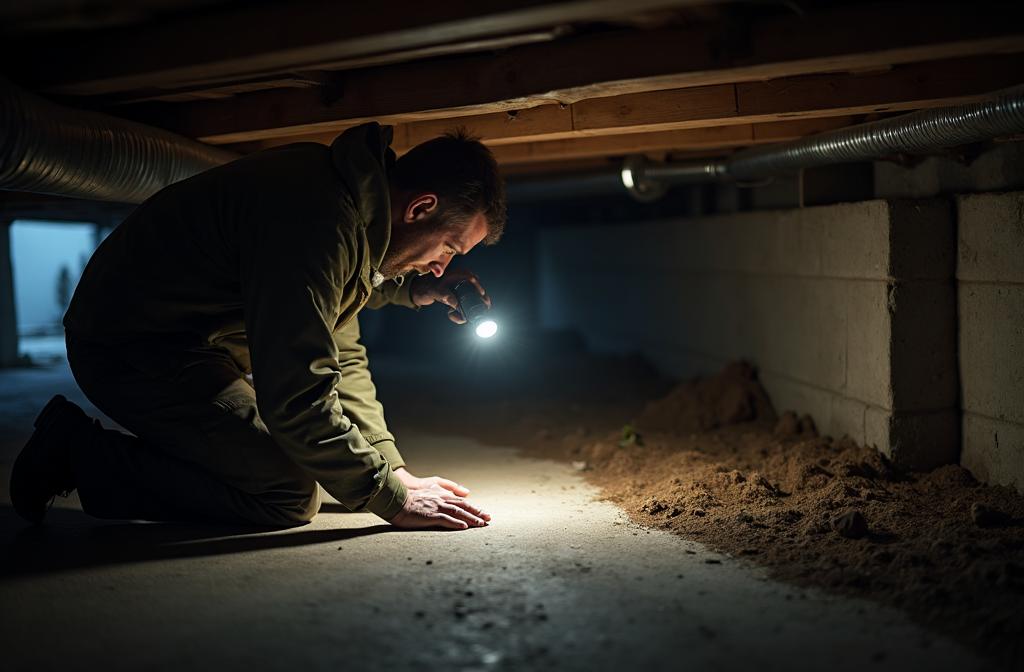
- Free inspection. Our technician inspects the crawlspace using professional lighting, protective equipment, and — when needed — remote cameras.
- Animal removal. We remove the animal using humane methods: live trapping for raccoons and opossums, one-way exclusion for rodents, and direct removal for snakes.
- Entry point sealing. All crawlspace entry points are sealed — foundation vent screens are replaced with animal-proof screening, access doors are reinforced or replaced, and foundation gaps are sealed.
- Damage repair. Torn vapor barriers are replaced. Damaged insulation is removed and replaced. Ductwork is repaired or replaced. Any mold-affected wood is treated or replaced.
- Crawlspace encapsulation (optional but recommended). For homeowners who want maximum protection, we offer full crawlspace encapsulation — a sealed, conditioned crawlspace with heavy-duty vapor barrier on walls and floor, sealed foundation vents, insulated walls, and a dehumidifier.
Crawlspace Encapsulation: The Ultimate Protection
Full crawlspace encapsulation transforms your crawlspace from a vulnerable, vented space into a sealed, dry, conditioned environment. The key components include:
- 20-mil reinforced vapor barrier on the crawlspace floor and walls (much thicker and more durable than standard 6-mil sheeting — animals can't tear through it)
- Sealed foundation vents that eliminate animal entry points and prevent unconditioned air from entering
- Insulated crawlspace walls that improve energy efficiency and eliminate condensation
- Commercial dehumidifier that maintains humidity below 50%, preventing mold and wood rot
- Sump pump (where needed) to manage groundwater
Encapsulation typically costs $5,000–$12,000 depending on crawlspace size, but it pays for itself through energy savings (15–20% reduction in heating and cooling costs), eliminated pest problems, and protection against the moisture damage that costs Georgia homeowners billions annually.
Get Help Today
If you suspect an animal in your crawlspace, don't wait. The damage grows every day — and the moisture consequences of a torn vapor barrier compound rapidly in Georgia's humid climate.
The Outdoors Group provides free crawlspace inspections across Metro Atlanta and West Georgia. We handle everything in-house — wildlife removal, vapor barrier replacement, insulation repair, ductwork repair, and full encapsulation. No subcontractors. No referrals. One team, one guarantee.
Call (770) 545-4388 today or schedule your free inspection online. We'll tell you exactly what's under your home — and give you a clear plan to fix it.